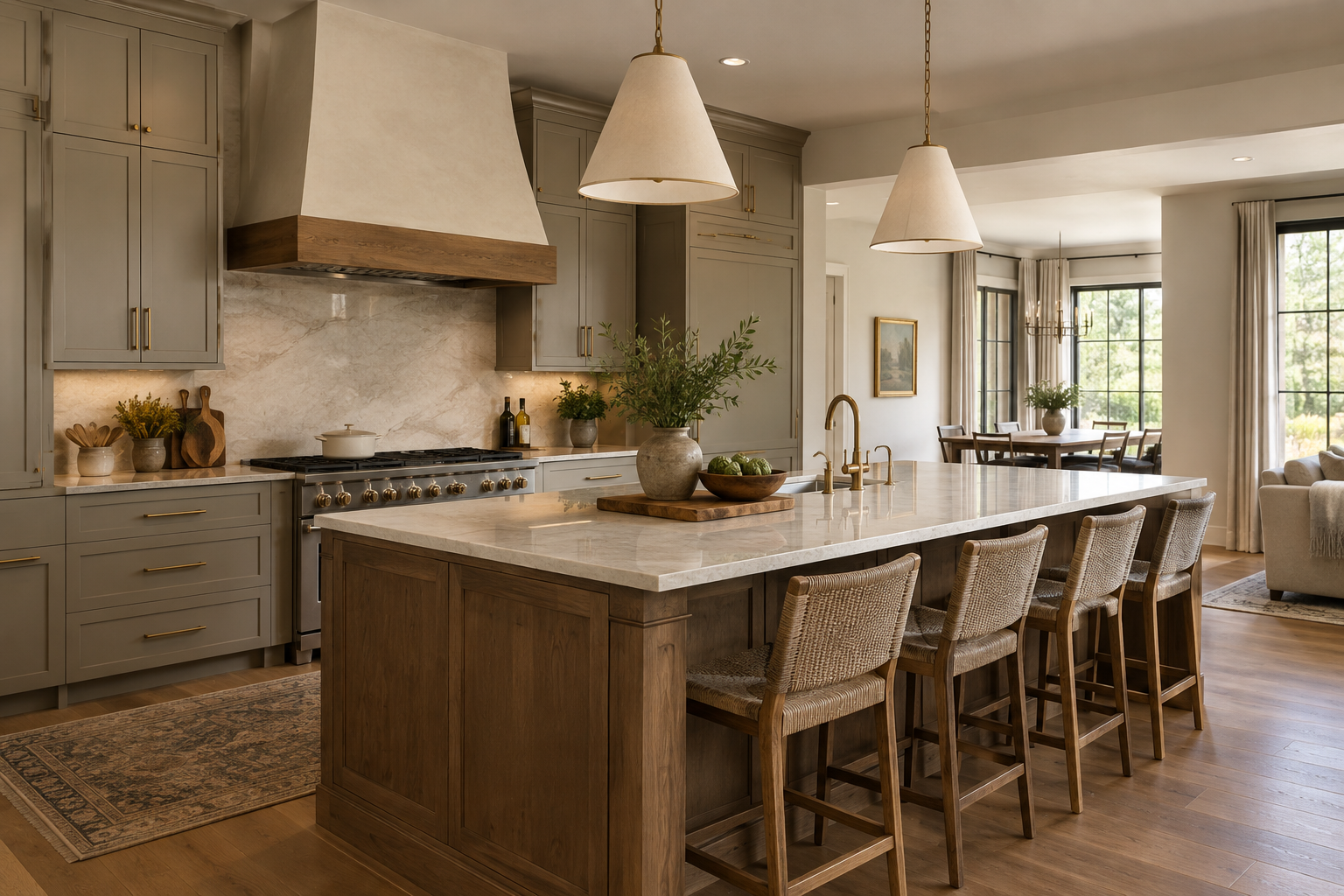
Warm woods, softer stones, and matte finishes are shaping kitchens that feel fresh now and will still feel relevant years from today.
The best luxury kitchen design trends for Franklin, TN homes are moving away from stark, all-white surfaces and toward warmer materials that feel more natural, layered, and durable. That does not mean every kitchen needs to look rustic or dark. It means homeowners are choosing finishes that bring depth and comfort into the room: stone with more character, wood with visible grain, and cabinet finishes that look tailored rather than flashy. For a remodeling project, the real question is not whether a material is trendy. It is whether it will still feel appropriate after the novelty wears off. In Middle Tennessee homes, where kitchens often need to balance everyday family use with entertaining, the most successful choices tend to be the ones that feel calm, grounded, and easy to live with.
Why warmer kitchens are replacing the all-white look
For years, bright white kitchens were the default for homeowners who wanted a clean, high-end feel. That look still has a place, but many families now want more softness and warmth. In a kitchen, warmth does not just mean darker colors. It can come from creamy stone, natural wood, muted paint tones, and finishes that reflect less glare.
This shift is partly visual and partly practical. Highly reflective surfaces can feel sterile in a large open-plan space, especially when a kitchen connects to living and dining areas. Warmer materials help the kitchen blend into the rest of the home instead of standing apart like a showroom. They also tend to hide everyday wear a little better, which matters in a room that sees constant use.
The key tradeoff is that warmth needs balance. If every surface is dark or heavily textured, the room can feel busy or closed in. The goal is not to replace white with brown. It is to create contrast with intention so the kitchen still feels open, bright, and refined.
How stone is changing: less uniform, more natural
Stone countertops and backsplash surfaces are moving toward more variation in tone and pattern. Instead of selecting a slab only for a crisp, uniform look, many homeowners are drawn to materials that show gentle movement, veining, or texture. That approach works especially well in kitchens that aim for a softer, more layered feel.
A more expressive stone can become the focal point of the room, which means the rest of the design needs to support it. Cabinetry, hardware, and lighting should stay restrained enough that the stone does not compete with too many other features. If the surface already has visual energy, simpler cabinet fronts or quieter paint colors often create the best result.
There is also a durability consideration. Some stones are more forgiving than others when it comes to etching, staining, or maintenance. Homeowners should think about how they actually cook, clean, and gather in the space. A beautiful surface only works long term if it matches the household’s expectations for care.
Stained wood cabinetry without the 1990s look
Stained wood is back in a meaningful way, but current versions look very different from the orange oak and heavy espresso cabinets many homeowners remember. Today’s stained cabinetry usually leans into mid-tone finishes, more visible grain, and simpler lines. The result feels warmer and more architectural, not dated or overly traditional.
The details matter. Rift-sawn grain and lower-sheen finishes tend to read more modern than glossy, high-contrast stains. So do cleaner door profiles, because ornate panels can make even a good stain feel heavier than intended. In a Franklin kitchen, a restrained stained wood island paired with painted perimeter cabinets can be a smart compromise: the room gets warmth and texture without feeling dark.
This is where homeowners should be careful with references from the past. A wood cabinet finish can either feel fresh or immediately bring back a dated era, depending on the undertone and sheen. If you want wood in the design, it is worth testing samples in your actual light and next to the flooring, counters, and backsplash. That is often where a finish either comes together or falls flat.
Matte finishes and low-shine surfaces feel more tailored
Matte and low-sheen finishes are a quiet but important part of the modern luxury kitchen. They reduce glare, soften reflections, and let material quality speak for itself. In practical terms, they can make a kitchen feel more relaxed and more custom, especially when paired with natural textures like wood, honed stone, or brushed metal.
This does not mean every surface should be flat or dull. A successful kitchen usually mixes finishes so the room has depth. For example, a matte cabinet finish can sit comfortably next to a subtly polished stone counter or a satin metal faucet. The contrast keeps the design from feeling one-note.
The tradeoff is maintenance and appearance under daily use. Some matte surfaces hide fingerprints well; others may show marks differently than homeowners expect. This is why product selection should account for real habits, not just style preferences. A premium remodel should make the room look better and function better, not simply photograph well.
How to use trend-forward materials in a kitchen that will last
The most durable kitchen designs usually separate lasting choices from easy-to-change ones. Cabinet construction, countertop material, and layout should be selected with a long time horizon in mind. Paint color, bar stools, decor, and even some tile choices can carry more trend without making the whole room feel temporary.
A useful approach is to build the kitchen around a stable material palette, then layer in warmth through details. That might mean a soft stone perimeter, stained wood on the island, understated hardware, and a backsplash that supports the overall tone rather than demanding attention. The room still feels current, but it does not depend on a single style statement to work.
Homeowners in Middle Tennessee often want kitchens that can handle both casual everyday life and entertaining. That makes balance especially important. A kitchen that leans too far into trend can feel tired quickly. One that avoids any personality can feel cold. The sweet spot is a design that has enough warmth and texture to feel welcoming, while still using classic proportions and sensible materials underneath.
If you are planning a kitchen remodel in Franklin or anywhere in Williamson County, the best starting point is not a color trend but a material strategy. Warm stone, well-chosen wood, and matte finishes can create a kitchen that feels current now and comfortable for years. Brick & Beam Homes helps homeowners sort through those choices with a design-build process that keeps the big picture in view. If you are ready to talk through what belongs in your kitchen and what is better left behind, contact Brick & Beam Homes to start the conversation.