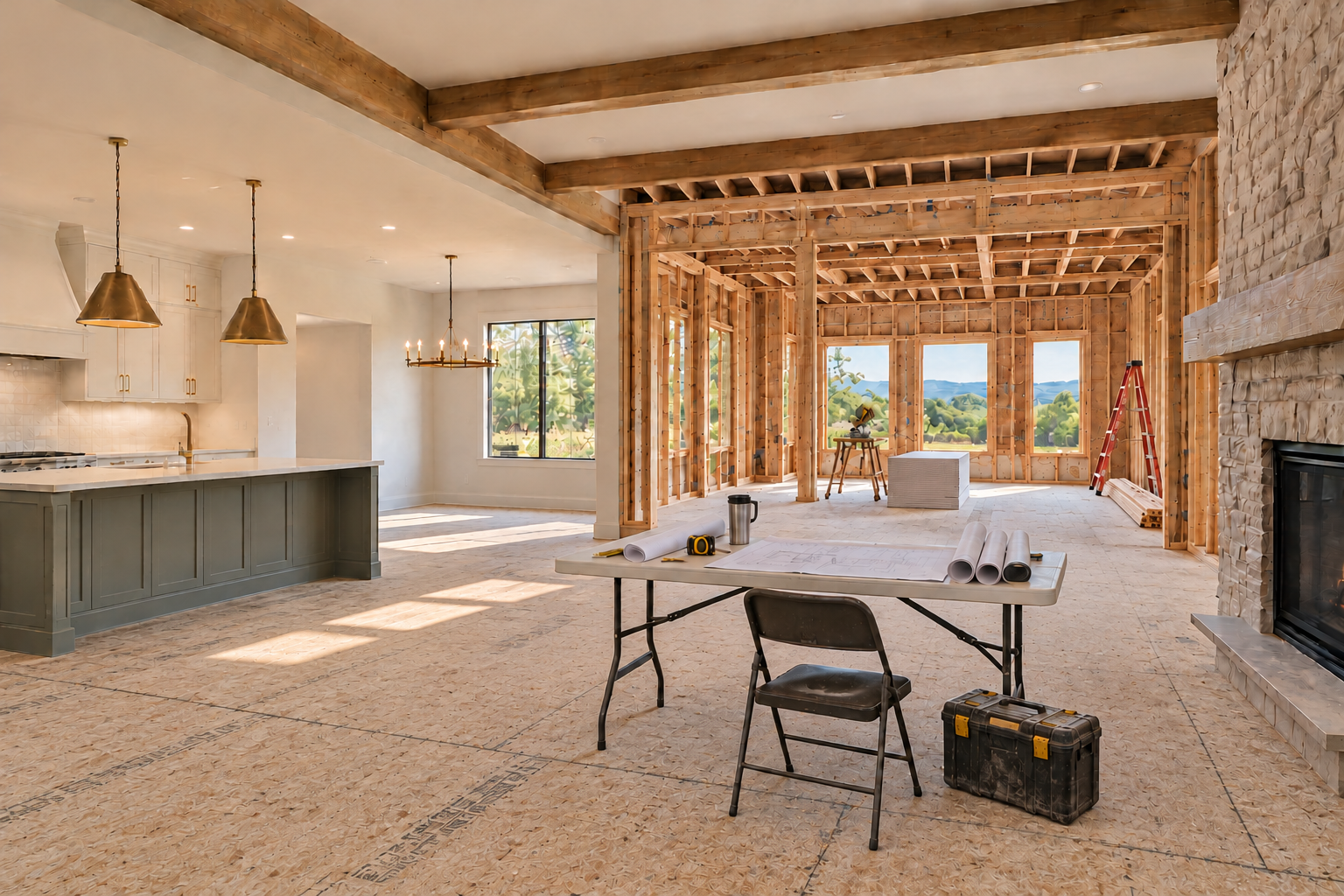
The best choice depends on what problem you’re solving, what each option truly costs, and how long you plan to stay.
For many Franklin and Middle Tennessee homeowners, the right answer is not automatically “remodel.” The better choice could be reconfiguring the home you already own, adding space, or selling and buying a different house. The key is to compare options that solve the same household need, using full project costs, transaction friction, monthly payment impact, and likely equity over the time you expect to stay. A construction budget by itself is not the same thing as the true cost of staying, expanding, or moving.
Start with the problem, not the project type
Before comparing dollars, define what actually has to change. Sometimes the issue is layout: a cramped kitchen, an awkward traffic flow, or a bath that no longer functions for a growing household. Other times the issue is square footage: a needed bedroom, office, or primary suite that the existing footprint simply cannot provide. And sometimes the issue is bigger than the house itself: the neighborhood, commute, schools, lot size, or daily logistics may be the real constraint.
That distinction matters because a $150,000 remodel and a $300,000 addition are not interchangeable solutions. If an existing floor plan can be reworked to solve the problem, remodeling may deliver the need with less disruption and less debt. If the home is fundamentally too small, an addition may be the only way to stay in a location you like. If the lot, structure, or location cannot support the outcome you want, moving may be the more practical financial decision.
Price the full cost of each option
A fair comparison includes every meaningful dollar, not just the contractor’s line item. For a remodel, that means design, permits, trade labor, finish selections, contingency, and any temporary living costs if the house becomes unusable during construction. For an addition, those same items apply, plus the added complexity of tying new space into the existing structure and systems. For moving, the cost is not just the new listing price; it also includes selling costs, buyer closing costs, and moving expenses.
Freddie Mac reported a 7.28% average 30-year fixed mortgage rate for October 1, 2026, as a benchmark for excellent-credit borrowers putting 20% down. In a worked example using that benchmark and assumed project budgets, monthly principal-and-interest payments came out to about $3,567 for a remodel, $5,001 for an addition, and $5,390 for moving into a replacement home. The point is not that those numbers fit every family. The point is that financing changes the comparison as much as the construction budget does.
This is where many homeowners get surprised. The least expensive-looking option on paper can become the most expensive once debt service and transaction friction are included. At the same time, the biggest project is not always the best value simply because it creates more space.
Check whether the house and site can actually support the plan
Not every home is a good candidate for expansion, and not every addition is worth forcing. Before assuming you can build out, you need to know whether the structure can accept new loads, whether the roofline can be tied in cleanly, and whether mechanical systems have the capacity to support the added space. Electrical, plumbing, drainage, and HVAC all need to be evaluated early, not after design is already underway.
The site matters too. Setbacks, easements, zoning rules, HOA restrictions, historic-district requirements, floodplain issues, and septic capacity can all shape what is possible. In Williamson County, those constraints vary by property and jurisdiction, so a decision should be based on the specific parcel rather than a general assumption about the area. A home that appears expandable on paper may be less practical once those limits are checked.
This is also why testing existing unused space should come first. Sometimes an attic, basement, bonus room, or overlarge area can be reworked into useful square footage without the cost and complexity of a full addition. If that solves the problem, it may be the cleanest path.
Compare monthly affordability with five- and ten-year economics
Monthly payment matters because even a great design can create strain if the financing stretches the budget too far. But monthly cash flow is only part of the story. You also need to ask what each choice looks like over your intended holding period. A remodel may preserve a favorable existing mortgage, while a move may replace it with a larger loan at today’s rate. An addition can sit in between, depending on how it is financed and how much value it truly adds.
In the worked example, the remodel had the lowest combined monthly debt service, the addition was higher, and moving was highest. That ranking can change if rates move, if the project budget grows, or if the purchase price changes. The example also showed that a 20% overrun on a large addition can push the monthly payment above the moving option. In other words, the affordability test is not just about the original estimate; it is about how much cushion you have if the project gets more expensive.
Over five and ten years, the picture changes again. The example suggested that staying and remodeling could preserve more equity than moving in the shorter term, while a larger addition could catch up over a longer horizon if the improvement is well aligned with neighborhood value. But equity is not the same thing as profit. Some of it comes from principal paydown, and none of it should be treated as guaranteed appreciation.
Use resale support, but do not overbuild for the neighborhood
A common mistake is to assume every added dollar of space or finish will come back at sale. It will not. The right question is whether the post-project home will still fit the market around it. A house can become too large or too expensive relative to nearby comparables, and then the marginal value of the improvement weakens.
National industry estimates cited by NAR and NARI suggest that some projects recover a portion of their cost, but not all of it. Those figures are useful as broad guidance, not as a promise. For a homeowner, the practical takeaway is simple: compare your project against similar homes in the same area, not against your own wish list alone. A well-judged remodel or addition should improve livability first and still make sense if you ever need to sell.
That is especially important in established Middle Tennessee neighborhoods where lot patterns, house sizes, and buyer expectations vary from street to street. If the project pushes the home beyond what the area typically supports, you may be creating a better house than the market will fully reward.
When moving wins, and when staying wins
Moving wins when the real problem cannot be fixed well enough inside the current property. If the location is wrong, the lot is too constrained, or the structural and site limitations make the desired expansion inefficient, replacing the home can be the smarter financial move. Moving can also win when the all-in cost of adding space approaches the cost of buying a more suitable home, especially once selling friction and new mortgage terms are included.
Staying wins when the location is right, the structure can be improved efficiently, and the project solves a real need without overreaching the market. If an existing mortgage is favorable, if the house has usable untapped space, and if a solid scope-based budget supports the work, remodeling may preserve both financial flexibility and day-to-day convenience. An addition can also win when the household truly needs more space and the property can support it without excessive complexity.
The best decision is rarely the cheapest sticker price. It is the option that solves the right problem at a cost you can sustain, with a realistic view of resale and future flexibility.
If you are weighing a remodel, addition, or move in Franklin or elsewhere in Middle Tennessee, start with a feasibility review and a scope-based budget, then compare those numbers against real candidate homes. Brick & Beam Homes helps homeowners think through the tradeoffs clearly so the final choice fits the house, the lot, the budget, and the life you want to live in it. If you are ready to compare your options, contact Brick & Beam Homes for a practical next step.